Why Offseason Training Is Important for Youth Athletes
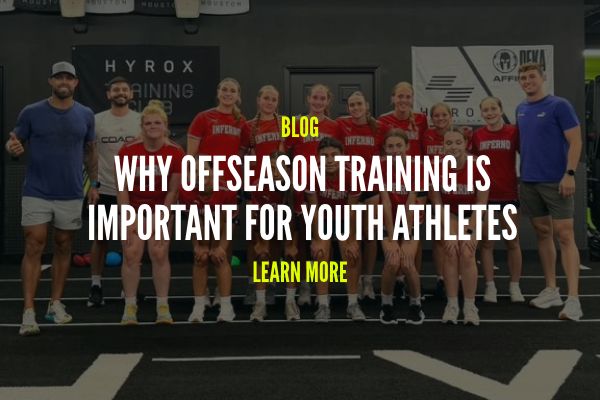
For young athletes, the end of a sports season doesn’t have to mean the end of their development. While practices, games, and tournaments provide valuable opportunities to compete and improve sport-specific skills, the offseason offers something just as important: time to focus on becoming a stronger, faster, and more well-rounded athlete.
Offseason training for youth athletes helps build the physical foundation that supports performance across nearly every sport. From improving speed and agility to developing strength, endurance, coordination, and confidence, a structured training program can help young athletes prepare for the demands of their next season.
At ROX Performance by CKF, we believe athletic development should extend beyond the competitive calendar. Our Youth Athletic Training programs give athletes ages 9 and older opportunities to continue improving through coach-led training designed around long-term performance and healthy development.
What Is Offseason Training for Youth Athletes?
Offseason training refers to structured physical development that takes place outside an athlete’s primary competitive season. Rather than focusing exclusively on team practices, games, and sport-specific drills, offseason training creates opportunities to improve overall athletic ability.
A well-designed youth offseason training program can incorporate strength training, speed and agility work, conditioning, coordination, balance, mobility, and movement mechanics.
For example, a soccer player might use the offseason to develop better acceleration and lower-body strength. A basketball player may focus on lateral movement, explosiveness, and body control. A baseball or softball player might work on rotational strength, coordination, and overall movement quality.
Although the demands of each sport are different, many of the physical qualities that support athletic performance are shared.
The goal isn’t simply to make athletes work harder. It’s to help them develop the physical abilities that make them more capable when they return to competition.
1. Build Strength That Carries Into the Next Season
A Stronger Athletic Foundation
Strength is an important component of athletic performance, regardless of the sport an athlete plays.
Developing strength can support acceleration, jumping, changing direction, maintaining balance, and controlling the body during athletic movements. It also provides a foundation for learning more advanced movement patterns as athletes mature.
During a competitive season, athletes often have limited opportunities for dedicated strength development. Practices, games, travel, and recovery already take up significant portions of their schedules.
The offseason creates additional time to focus on building strength through structured, age-appropriate exercises.
At ROX Performance by CKF, our youth training emphasizes proper technique, controlled progression, and movement quality. Athletes work on developing strength appropriate for their age, experience, and abilities rather than simply lifting heavier weights.
This approach helps create a foundation that can support continued athletic development over time.
2. Improve Speed, Agility, and Explosiveness
Develop More Athletic Movement
Speed and agility are valuable across nearly every competitive sport.
Soccer players need to accelerate into open space and quickly change direction. Basketball players rely on lateral movement and explosive first steps. Football players need to react, accelerate, and control their bodies through rapid movements.
These skills involve much more than simply running fast.
Effective youth speed and agility training focuses on acceleration, deceleration, coordination, body positioning, and the ability to change direction efficiently.
The offseason provides an opportunity to develop these qualities without the constant demands of competition.
Through structured drills and performance-focused exercises, athletes can improve how they move while building greater awareness and control of their bodies.
Our coaches at ROX Performance by CKF incorporate speed, agility, and movement training into youth athletic development to help athletes build skills that transfer across different sports.
3. Address Weaknesses That Get Overlooked During the Season
Turn Weaknesses Into Progress
During the competitive season, coaches are often focused on preparing their teams for the next opponent, improving strategy, and developing sport-specific skills.
That doesn’t always leave enough time to address each athlete’s individual physical development.
The offseason creates an opportunity to identify areas that need additional attention.
Some athletes may struggle with coordination or balance. Others might need to improve endurance, lower-body strength, acceleration, or their ability to maintain control when changing direction.
These weaknesses can be difficult to address when an athlete is already managing multiple practices and games every week.
A structured offseason training program allows young athletes to work on those areas consistently, building confidence and improving their overall athletic foundation before the next season begins.
At ROX Performance by CKF, our coach-led approach helps athletes focus on purposeful development rather than simply completing another workout.
4. Support Injury Prevention Through Better Movement
Move Better. Train Smarter.
Youth sports can place significant physical demands on developing athletes.
Repeated sprinting, jumping, cutting, and changing direction require strength, coordination, and control. As athletes grow and their bodies change, learning how to perform these movements efficiently becomes increasingly important.
Properly designed strength and conditioning programs can help reduce certain sports injury risks by improving physical capacity and movement control.
Offseason training provides time to work on important fundamentals such as landing mechanics, balance, deceleration, core stability, and controlled movement.
It also gives athletes an opportunity to improve strength and conditioning without the same competitive workload they may experience during their season.
Of course, recovery remains essential. Offseason training should complement adequate rest, not replace it.
5. Build Endurance and Overall Conditioning
Prepare for Game-Day Demands
Athletic performance isn’t just about being fast or strong. Athletes also need the conditioning to maintain their effort throughout practices, games, and tournaments.
A player might have excellent speed early in a game but struggle to maintain that intensity as fatigue builds.
The offseason is a valuable opportunity to improve cardiovascular fitness, muscular endurance, and overall work capacity.
For youth athletes, conditioning should be appropriate for their age, development, and sport. It doesn’t need to involve excessive running or exhausting workouts every day.
Instead, a structured approach can incorporate intervals, athletic movements, strength circuits, and other forms of conditioning that help develop fitness progressively.
Our Youth Athletic Training programs at ROX Performance by CKF combine multiple elements of performance training to help athletes become more capable and well-rounded.
6. Develop Confidence Beyond the Playing Field
Confidence Through Consistent Progress
One of the most valuable benefits of offseason youth training isn’t always something that can be measured with a stopwatch or a weight.
It’s confidence.
When young athletes recognize improvements in their strength, speed, coordination, or endurance, they begin to develop greater confidence in their abilities.
An athlete who previously struggled with a movement may gradually master it. Someone who lacked confidence in their speed may notice improvements in acceleration. Others may simply become more comfortable challenging themselves in a structured training environment.
These experiences can help young athletes develop discipline, consistency, resilience, and a stronger understanding of what they can accomplish through effort.
7. Stay Active Without Playing the Same Sport Year-Round
Development Beyond One Sport
Playing the same sport throughout the entire year can create challenges for young athletes, especially when there is limited time for recovery or other forms of physical activity.
Repetitive movements, demanding schedules, and constant competition can contribute to physical fatigue and mental burnout.
Offseason athletic training provides an opportunity to step away from the competitive demands of a specific sport while continuing to develop useful physical skills.
Instead of focusing exclusively on shooting, passing, pitching, or other sport-specific techniques, athletes can work on strength, coordination, speed, balance, and overall fitness.
This broader approach can be especially valuable for younger athletes who are still developing their movement skills and discovering their athletic interests.
Offseason training shouldn’t mean eliminating rest or immediately replacing every team practice with another workout. A healthy balance of recovery, general physical activity, and structured training supports long-term development.
8. Return to Competition Better Prepared
Make the Offseason Count
The goal of offseason training is to help athletes enter their next season with a stronger physical foundation.
An athlete who has consistently worked on strength, movement, conditioning, and coordination may be better prepared to handle the demands of practices and competition.
Rather than spending the beginning of the season rebuilding basic fitness, they can focus more attention on their sport-specific development.
This doesn’t mean every young athlete needs an intense training schedule or that constant training guarantees better performance.
Consistency, recovery, and appropriate programming are much more important than simply increasing workout volume.
For athletes who want to continue improving, a structured offseason training program provides direction and accountability during a time when organized team activity may be limited.
How Often Should Youth Athletes Train During the Offseason?
There isn’t one perfect offseason training schedule for every young athlete.
Training frequency depends on age, experience, sport, current activity level, recovery needs, and individual goals.
For many youth athletes, two or three well-structured training sessions per week can provide a useful starting point for developing strength, speed, agility, and overall athletic fitness.
Some athletes may benefit from a different schedule depending on their existing commitments and level of development.
The most important factors are consistency, proper coaching, adequate recovery, and making sure training remains enjoyable.
Young athletes should also have opportunities for unstructured play, recreational activities, and time away from organized training.
At ROX Performance by CKF, our programs provide a structured environment where athletes can work toward their goals while developing healthy training habits.
Offseason Youth Athletic Training at ROX Performance by CKF
Keep Developing Between Seasons
At ROX Performance by CKF, we help young athletes continue developing beyond their team practices and competitive seasons.
Our Youth Athletic Training programs focus on building strength, speed, agility, endurance, coordination, and overall athletic performance through structured, coach-led workouts.
We work with athletes ages 9 and older across a variety of sports, including soccer, basketball, football, baseball, softball, and more.
Our training isn’t limited to athletes competing at an elite level. We welcome young athletes who want to become stronger, improve their fitness, build confidence, or simply develop better movement skills in a supportive environment.
PRIME Youth Fitness Membership
For families looking for a consistent approach to year-round athletic development, our PRIME Youth Fitness Membership provides ongoing opportunities for coach-led training.
PRIME is designed to help young athletes build healthy habits, improve physical fitness, and continue progressing throughout the year.
It’s an option for athletes who want to stay active during the offseason, complement their existing sports schedules, or build a stronger foundation before joining a competitive team.
Sports Team Training
ROX Performance by CKF also partners with youth sports teams and organizations to provide dedicated performance training.
Our Sports Team Training programs can be tailored around the demands of a particular sport, helping teams develop strength, speed, agility, conditioning, and overall athletic ability together.
This gives coaches and organizations an opportunity to complement their regular practices with structured physical development.
Final Thoughts: The Offseason Is an Opportunity to Grow
The offseason isn’t just the time between competitive seasons. It’s an opportunity for young athletes to develop the physical skills, confidence, and training habits that can support them for years to come.
Strength, speed, agility, endurance, and coordination all play important roles in athletic performance, and these qualities take time to develop.
With the right balance of structured training, recovery, and consistency, young athletes can make meaningful progress without the pressure of constant competition.
At ROX Performance by CKF, we’re committed to helping athletes build that foundation through purposeful training and experienced coaching.
Ready to make the most of the offseason? Explore our Youth Athletic Training programs and PRIME Youth Fitness Membership to help your athlete continue growing, improving, and preparing for what’s next.